Bagalur vs Devanahalli | Where Should You Buy a Flat?
Bagalur vs Devanahalli is a common shortlist for buyers considering apartments in North Bangalore. Both areas can put you within reach of the airport corridor, yet the decision changes once you plot your office, school and weekday errands from the gate of a specific project. A location that looks convenient for an occasional flight may add time to the trips your household makes every day.
Start with the addresses that already shape your week. For one household, that might mean an office in KIADB Aerospace Park and a school towards Yelahanka. For another, it could mean two people working around Devanahalli and relatives living on the same side of the airport corridor. Keep those destinations fixed during the comparison. They make it easier to see whether a better floor plan or a lower quote is worth the extra travel.
Bagalur vs Devanahalli at a Glance
Put Bagalur high on your shortlist if your work, clients or daily pickups regularly take you into the KIADB Aerospace Park corridor. Put Devanahalli high on the list if your regular destinations cluster around Devanahalli town or sites on that side of the airport corridor. In both cases, compare projects by their entrance pin. Properties marketed under the same locality can sit on different roads, with different choices for reaching the nearest main junction.
For a Bagalur reference point, open the Puravankara Northern Lights KIADB project listing and note its location in the Aerospace Park corridor. Then pick a Devanahalli project within the same total purchase budget. A comparison between two actual projects gives you gates, floor plans, handover schedules and cost sheets to check in person.
Families sometimes choose a location based on the commuter who travels the farthest. Count trips as well as distance. One long office trip twice a week may be easier for the household than a difficult school run twice a day. If two people need the car at overlapping times, add the cost and convenience of a second commute option to the decision.
Test the Commute You Would Actually Make
Choose the way you expect to travel after moving in. For a car commute, start timing from the property’s entrance and finish at your office parking gate. For a cab commute, include pickup time and whether drivers tend to cancel in that stretch at your usual hour. If you plan to use a company shuttle, locate its actual stop, find out when it runs and see how you would get home after missing the last service.
Do the return trip as well. A turn that feels simple on the morning drive can be awkward in the opposite direction. Note any long U-turn, narrow stretch, school gate or construction diversion that affects the last few minutes. You repeat these parts of the trip every day. A home with a modestly longer map estimate can still feel easier if its approach is more predictable.
Use the same conditions to compare both areas. If you can only visit on the weekend, look up both routes for the same weekday departure hour and treat the numbers as estimates. Then test the route for whichever project makes your final shortlist. If frequent flying is part of your routine, check terminal and ground transport information on the official Kempegowda International Airport website and plan your test drive around the terminal you use.
At a large apartment development, consider the time from the approach road to your parking space and from parking to your lift. Ask whether your tower will use the same access point you visited. An internal drop-off or parking route can make a meaningful difference when you make the trip with groceries, luggage or a sleeping child.
WhatsApp us for the Northern Lights location pin and a site visit.
Check the Neighbourhood on a Normal Weekday
Write down five nearby services you would actually use. A useful starting list is a pharmacy, grocery shop, clinic, school or daycare, and somewhere to pick up dinner. For each, identify a named option and a workable backup. If you are planning around a particular school, confirm admissions and transport directly. Ask whether the school bus picks up at your gate and whether its timetable works for your family.
Try a short errand loop after viewing the apartment. Leave the site, collect a few groceries, pass the pharmacy and return by the route you would normally use. Time the loop as one trip. You will learn whether the destinations are clustered conveniently, how easy it is to stop, and whether the stretch between two places is comfortable on foot.
Visit in the evening if someone in your household often comes home after dark. Look at lighting, crossings and the walk from a bus stop or cab drop-off. If elderly parents are likely to live with you, check how a cab reaches the entrance and whether there is somewhere to wait under cover. If you have a dog, look at the route you would walk on an ordinary morning and where traffic crosses it.
A proposed retail block may make the area more convenient later. Find out what is already open and which of the planned shops or services are expected to be usable around your move-in date. If grocery shopping still requires a drive, include that trip in your estimate of weekly travel.
Compare Two Projects, Then Compare Two Towers
A good location can still produce a poor match if your shortlisted unit faces a busy internal road, sits a long walk from the gate or depends on an amenity you rarely use. At a large site, get the master plan and ask someone to mark the tower, parking access, visitor drop-off and pedestrian exits. Walk the accessible parts of the site and ask which routes are planned for handover.
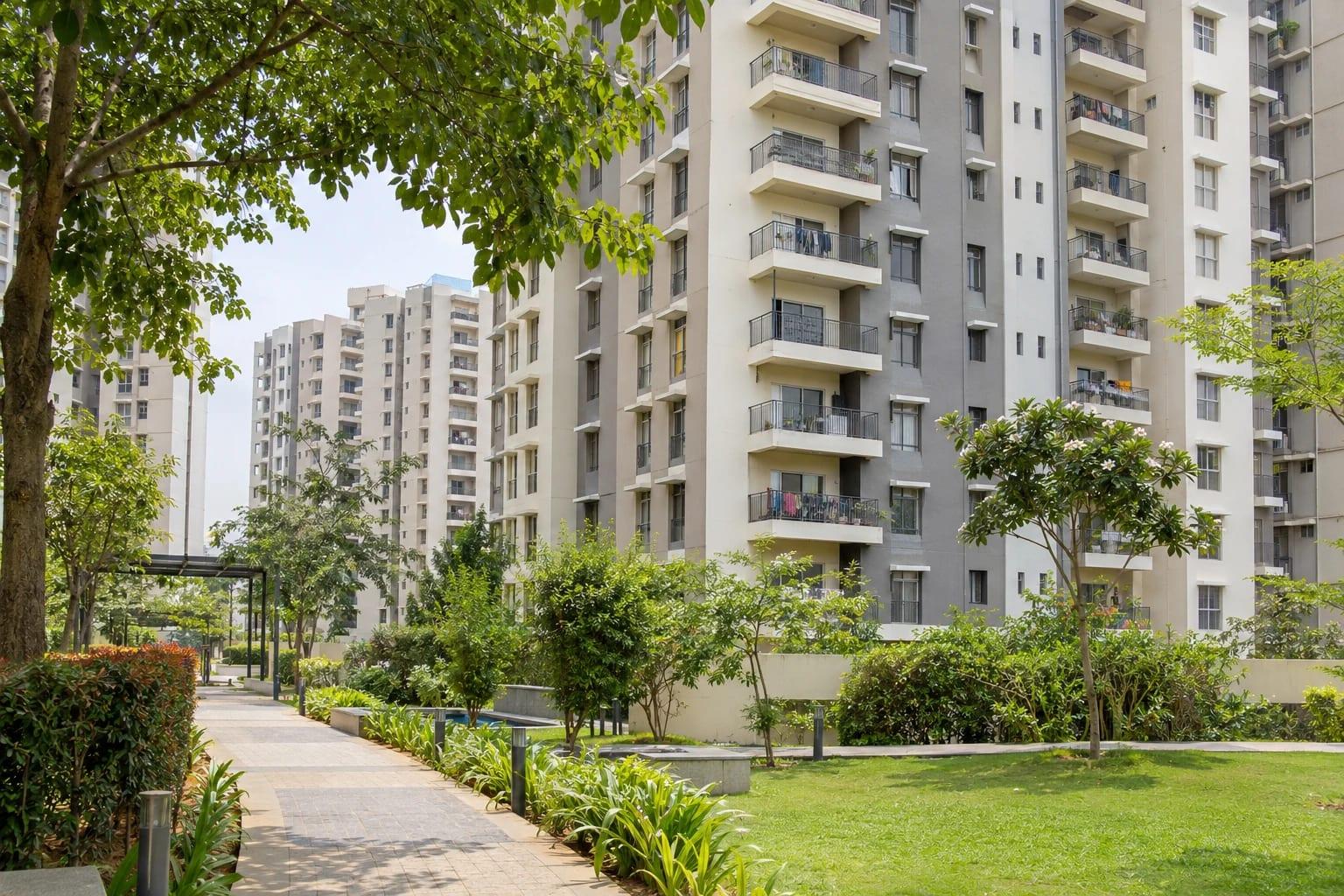
In Bagalur, use the Northern Lights project details and community overview to build your site-visit checklist. The development is planned across about 24.59 acres, with approximately 77% open space and two clubhouses. Ask what sits closest to the unit you are considering and how the planned green areas connect to everyday routes.
Repeat the exercise in Devanahalli. If one project is already occupied, walk the route, inspect the shared spaces and speak with residents when appropriate. If the other is under construction, use the current plan and ask for written clarification on features important to you. Keep track of which details you saw yourself and which depend on a future phase.
Measure the usable spaces in each floor plan, note the view from the main living area, and consider sun exposure at the times you are home. Ask what is planned beyond the plot boundary if the view is part of the price premium. If there is vacant land next to the unit, ask to see how the tower sits in relation to that plot and factor possible changes into what you would pay for the view.
Work From the All-In Price and the Same Move-In Window
Ask for an itemised cost sheet for one apartment in each project. Use the same bedroom count or a similar usable area if possible. Record the quoted apartment price, any floor or view premium, parking terms, applicable taxes and charges, and payments due at handover. Add your own estimate for essential interiors, appliances and moving. Use the total you would actually need to pay as the starting point for comparison.
Next, put each payment schedule beside your household calendar. If one unit is ready sooner, it may allow you to stop paying rent earlier. A later handover may spread out some costs but can extend the period when you pay rent alongside loan-related payments. Ask your lender for an estimate based on the project’s schedule and your down payment. Leave room in your cash plan for the costs that fall around move-in.
A useful question is how you would handle six more months in your current home. Think about lease renewal, school admission dates and any planned move for parents. If a later move creates problems, put a value on certainty. If your current arrangement is flexible, you have more room to choose a layout or location that suits you better over the longer term.
Also compare recurring costs. A longer weekday drive can mean more fuel, cab trips or the need for another vehicle. Monthly maintenance can affect what comfortably fits your budget. A home that wins on booking price may look different once you add the costs that continue after possession. Mark estimates as estimates and keep a separate line for confirmed charges.
WhatsApp us for a unit-specific Northern Lights cost sheet.
Give Amenities a Place in Your Weekly Routine
Start with the activities you already do. If you walk every evening, prioritise a continuous and comfortable walking route. If your child plays a sport, ask about coaching, court access and booking hours. If you work from home, check where a co-working room sits and how you would use it during a normal workday. For each facility, check whether its opening hours and location work for the person in your household who would use it.
On the master plan, trace the walking route from your tower to your two most-used facilities. Check whether you cross a vehicle lane or go through a different level. Ask which facilities are scheduled to open with your tower, what maintenance covers and whether bookings or classes carry separate fees. In an occupied project, observe how busy the amenity is at the hour you would use it.
Consider the impact on your unit, too. A balcony over an active play area can be appealing if you want the room to feel connected to the community. It may be less appealing if you work evening shifts or need a quiet afternoon. A unit farther from the central green may still have the best layout for your routine. Use the view and route you would live with to decide how much an amenity adds to a particular apartment.
How to Compare Rental Potential Without Guessing
If renting out the apartment is part of your plan, look for evidence from occupied projects serving similar tenants. Compare the same bedroom count, similar usable area, furnishing level and parking. Ask how long units have been listed and whether the advertised rent includes maintenance. A furnished apartment in a completed society can set an unrealistic benchmark for an unfurnished unit in a project that has only just started handover.
Think through the likely tenant’s week. Where would they work? Would they have a car? How would they get groceries or reach a bus pickup point? If your rental case depends on corporate tenants, check what those tenants actually choose in competing buildings. Ask a local broker about recent transactions, and treat asking rents as one data point until you have stronger evidence.
For a simple comparison, estimate annual rent after allowing for vacancy, then subtract owner-paid maintenance, repairs and other recurring costs where applicable. Divide that figure by your estimated total acquisition cost. Run one scenario using a lower rent or a longer vacancy period so you can see how sensitive the result is. Apply the same assumptions to both locations and review whether the purchase still works if the first lease takes longer than expected.
What to Check on a Second Visit
Return at a different time of day and look at one detail you missed on the first visit. If you toured the site in bright afternoon light, return in the morning to judge shadows and traffic near the gate. If you looked at a sample flat, bring the unit drawing and check how the entrance, balcony and bedrooms in the actual plan differ. Use the visit to resolve whatever is holding up your decision.
Ask the salesperson to identify the project phase and tower on the documents they share. Write down the expected handover date, the parking allocation terms, and the availability of the facilities you consider essential. If a decision depends on a proposed access road or a retail block, ask when it is expected to be usable. Keep a copy of anything material to the purchase alongside the dated quotation.
If the first visit was a sales appointment, leave yourself time to explore the surroundings independently on the second one. A road that looks busy outside the sales office may ease up farther along your route. A service you assumed was walkable may require crossing traffic without a convenient crossing. Note the actual access conditions for each household member, including anyone who will regularly walk, take a cab or use public transport.
Make the Final Shortlist
For each property, write down the real approach road, the longest routine trip, the usable floor area, the date on the quote and the expected move-in window. Mark one deal-breaker if there is one. Then record the feature you would happily pay for, such as a better third bedroom, a less stressful commute or easier access to family.
Review the notes after you have left the sites. If both homes fit the budget, choose the one that makes the most demanding part of your week easier. If one site feels easier now but relies on too many future assumptions at handover, test what will still work if those plans shift. If the only reason to favour a unit is a temporary offer, ask yourself whether you would pick that unit at the same price as the alternative.
For buyers keeping Bagalur on the shortlist, revisit the Northern Lights by Puravankara property page before booking a visit. Bring one comparable Devanahalli option, one preferred unit layout and the address of your most frequent destination. That gives you a concrete location and apartment to compare on the same day.
Frequently Asked Questions
Which area works better for someone employed in KIADB Aerospace Park?
Start with projects in Bagalur that have a convenient route to your workplace gate. The trip from the residential entrance to the exact office gate you use is the most practical comparison. Test it against your Devanahalli option at your usual travel hour. If you travel by company shuttle, include the trip to the pickup point.
Should airport access decide the purchase?
It can carry more weight if frequent flights or airport-area work are part of your routine. For an occasional traveller, school, work and healthcare trips usually offer a better basis for the shortlist. Rank each trip by how often you make it and how flexible its timing is.
Can I compare an under-construction home with a ready apartment?
Yes. Compare the date you need to move, the payments due before that date and the facilities you expect to use. Visit the completed home at a time you would normally be there. For the under-construction home, check which features are scheduled for your phase and whether your current lease gives you enough flexibility.
WhatsApp Perfect Neighbourhood to shortlist homes within your budget.