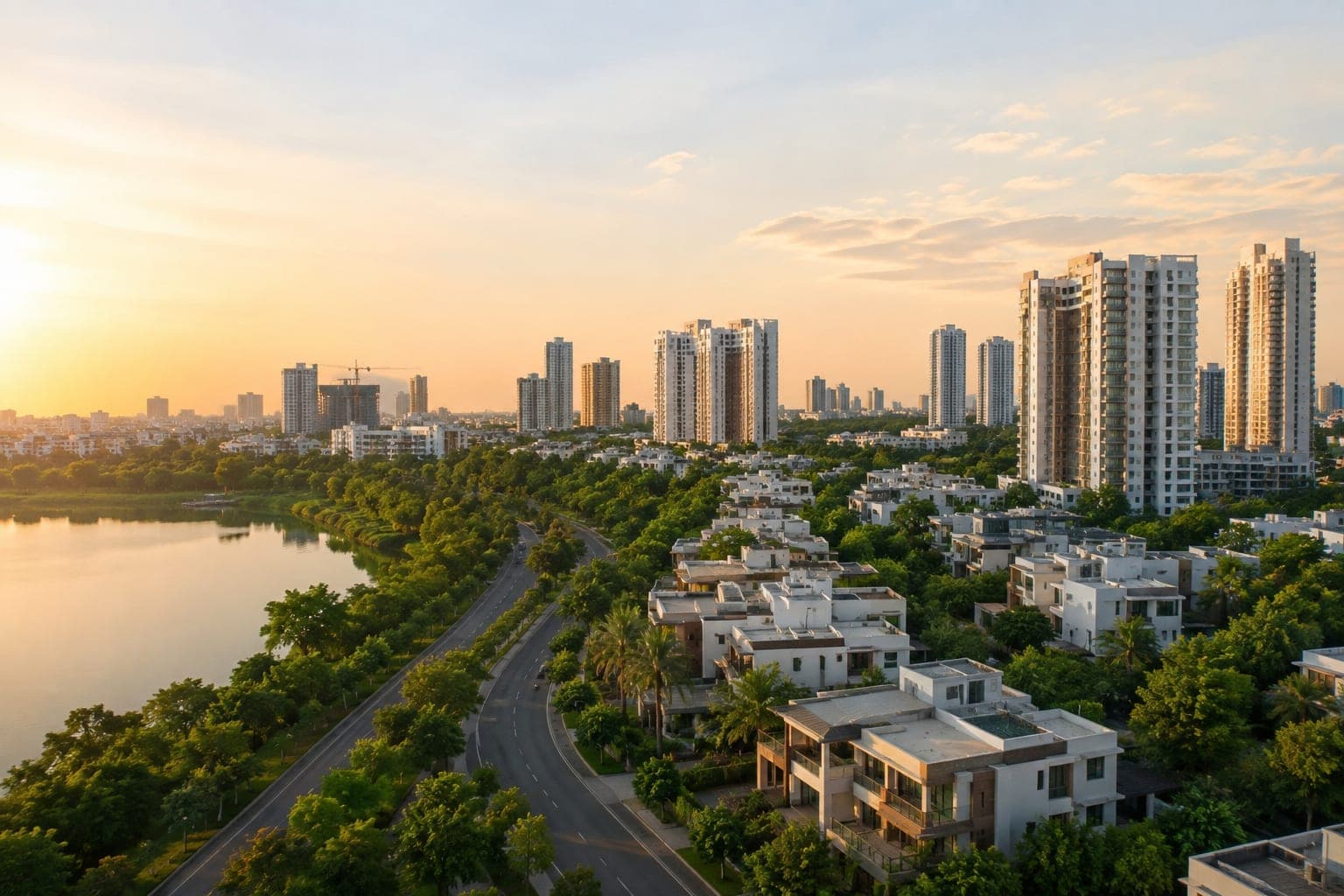
When people start looking for a home in Bangalore, they usually ask one question first: "Which project should I buy?" That makes sense, because projects are what you see in ads. But it is the wrong question to start with. A project is just a building. The area around it is what you actually live in every single day.
The area decides how long you sit in traffic each morning. It decides which school your child can reach on time. It decides how far you drive if someone falls sick at night. And it decides what your home will be worth years from now. A builder cannot promise you any of that. The area can.
Why Perfect Neighbourhood Says to Pick the Area First
If you pick a good area, even a simple project will treat you well over time. If you pick a bad area, even a beautiful building becomes a home you want to leave. That is why every conversation at Perfect Neighbourhood starts with where you should live, not what you should buy.
Bangalore is not one city market. It is many small markets joined together by big roads. Each one behaves differently. Some have lots of offices nearby. Some have empty land still waiting to be built on. Some have terrible traffic at 9 in the morning and none at all on Sunday. You need to know which kind you are buying into.
The Simple Commute Test Perfect Neighbourhood Recommends
Traffic is the biggest problem in Bangalore, and most buyers guess about it instead of checking. The same 12 kilometres can take 25 minutes or 75 minutes. It depends completely on which roads are in between and what time you leave home.
So do this one test. Drive the exact route yourself. Start from the actual site. Go at the actual time you would go to work — between 8:30 and 9:30 in the morning, and again around 6:30 in the evening. Do not test it on a Sunday afternoon. Do not trust a maps app.
Sales teams will tell you the office is "just 20 minutes away." That number is usually true only at midnight, when the roads are empty. Test it for every person in your family who travels, including the school trip. If two people in your home work in opposite directions, it is often smarter to live somewhere in the middle than right next to one office.
How Perfect Neighbourhood Checks If the Roads and Metro Are Real
Almost every new area in Bangalore is sold with a promise. A metro line is coming. A road is being widened. A big new highway is being planned. Some of these actually get built. Others stay on paper for ten years or more.
The problem is that the price you pay today already includes that promise. So you are paying for something you might never get.
Here is a safer way to think. Judge an area by what is already there, not by what is promised. Treat promises as a bonus, not a reason to buy. Before you believe a claim, ask three things. Has building work actually started on the ground? Has the government finished buying the land it needs? Is there a real timeline from the government, not just from a brochure?
And ask one more question that saves people a lot of trouble later: where does the water come from? Some areas get proper piped water from the Cauvery river. Others depend on borewells and water tankers. That difference matters every single day of the year.
What Perfect Neighbourhood Looks for Around Your Home
An area can look complete on a map and still feel empty in real life. What matters is how many options you have, not just whether something exists.
Take schools. One good school nearby sounds fine, until admission season comes and you have no backup and no bargaining power. You want three or four real choices, ideally with different education boards. For hospitals, look for a big multi-speciality hospital with a proper emergency department within 20 minutes. A small clinic five minutes away is not the same thing.
Shops and supermarkets come after people move in, not before. So a new area will feel empty for the first few years. That is normal, but plan for it instead of hoping it fixes itself quickly.
The last thing to check is how many offices and jobs are within about 30 minutes. This quietly decides whether people will want to rent your home later, and whether you can sell it easily. Two areas can cost the same today and look completely different ten years later just because of this one factor.
Why Perfect Neighbourhood Talks About Empty Land Before Price
Areas behave differently depending on how much empty land is left in them.
In older, fully built areas, there is no room for new projects. When more people want homes but nobody can build them, prices go up steadily and selling is quick. But you pay a high price to enter, and most of the price rise has already happened before you arrived.
In newer areas, hundreds of acres are still being built. Prices today are genuinely lower. But new buildings keep coming up around you for years, all competing with yours, so prices rise slowly until the area fills up.
Neither one is better. They suit different plans. If you think you will sell within five years, the older and busier area is usually safer. If you can wait ten years or more, and the newer area has real offices coming, it often gives you more.
The Full Cost of a Bangalore Home, Explained by Perfect Neighbourhood
The price in the advertisement is almost never the price you pay. Your real budget also has to cover government registration fees and stamp duty, tax on under-construction homes, charges for a higher floor or a better-facing unit, club membership fees, car parking, and a deposit for building maintenance.
Then there is the cost of actually making the empty flat liveable — wardrobes, kitchen, lights, curtains. Almost nobody plans for this, and it easily runs into lakhs.
Finally, check the monthly maintenance bill. Big fancy amenities cost money to run every month. A clubhouse you use twice a year still shows up on your bill twelve times a year, for as long as you own the home.
Flat, Villa or Plot: What Perfect Neighbourhood Suggests
Once you know the area, the type of home decides how easy it is to rent or sell later.
Flats are the easiest to rent and the fastest to sell, and someone else handles the maintenance. Villas and row houses feel more special and suit families who plan to stay for a long time, but they take longer to sell because you have to wait for the right kind of buyer. Plots do not get old the way buildings do, and land value often grows the fastest, but you must check the ownership papers very carefully and you earn nothing from the land until you build on it.
The Paperwork Checks Perfect Neighbourhood Never Skips
This is the part most buyers leave to the seller, and it is the part that hurts most when it goes wrong.
Every legal project in Karnataka must be registered with a government body called RERA. Check that registration number yourself on the official website, rera.karnataka.gov.in. If a project is very new and registration is still being processed, that is normal — but do not pay any non-refundable money until it is done.
Next, ask for the ownership history of the land and a certificate showing there are no loans or legal claims on it. Get your own lawyer to read these, not the builder's lawyer. Then compare the government-approved building plan with the brochure, because things shown in pretty pictures are not always approved. And take the possession date from your written agreement, not from a conversation.
How to Make Your Shortlist with Perfect Neighbourhood
Do it in this order and it stops feeling confusing. First, fix your full budget, including everything above. Second, choose just two areas using the traffic test and what is around them. Third, decide flat, villa or plot. Only then pick three or four projects and go see them.
Buyers who start with the area usually visit four sites and decide. Buyers who start with advertisements visit fifteen and end up more confused than when they began.
If you would rather have someone do that filtering for you, Perfect Neighbourhood's verified project listings check approvals, prices and possession status before a project ever reaches you. Choose the area first, and the right home usually follows.
buying a home in Bangalore, best areas in Bangalore, Bangalore property guide, RERA verification Karnataka, home buying checklist