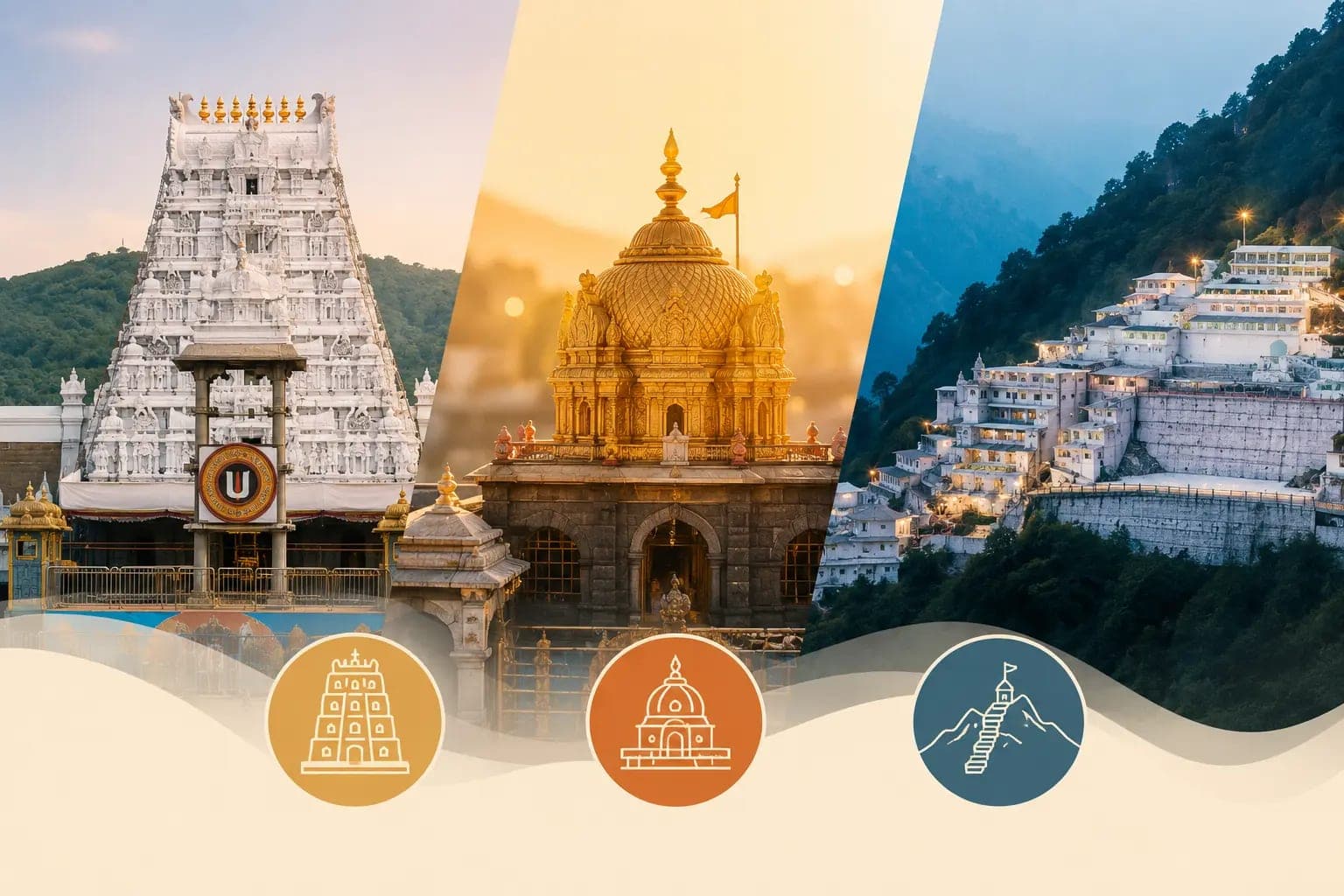
Tirupati, Shirdi and Vaishno Devi: What a Mature Temple Economy Looks Like After Thirty Years
India's biggest pilgrimage centres are no longer only places where people visit a temple and return home. Over the last thirty years, places such as Tirupati, Shirdi and Vaishno Devi have slowly built something much bigger: a temple economy. This means an entire local economy grows around the needs of pilgrims, including hotels, restaurants, transport, shops, hospitals, jobs, roads and real estate.
This change is important for India's growing religious tourism market. A good example of how pilgrimage can shape a wider destination is The Sarayu Ayodhya by House of Abhinandan Lodha, a premium plotted development positioned close to the Sarayu River and the wider Ayodhya growth story. The bigger question is not simply how many people visit a temple. It is what happens to the city when millions of visitors keep coming for decades.
What Is a Mature Temple Economy?
A mature temple economy is one where religious travel supports many parts of daily life. A pilgrim may start with a train or flight ticket. Then comes a hotel room, local transport, food, shopping, temple services and sometimes a longer stay.
Each step creates income for someone. Drivers get work. Hotels need staff. Restaurants buy vegetables and other supplies. Shops sell flowers, clothes and souvenirs. Construction companies build hotels, homes and commercial spaces. Banks, hospitals, security companies and technology businesses also become part of the ecosystem.
The temple is therefore the main attraction, but the economic activity spreads far beyond its gates.
Tirupati Shows the Power of Scale
Tirupati is one of the clearest examples of a mature pilgrimage economy in India. The Tirumala Tirupati Devasthanams, or TTD, now manages an operation that looks much like a large public institution. Its work covers pilgrim facilities, food, accommodation, healthcare, education, security and other services.
The scale is visible in the numbers. TTD approved a budget of ₹5,456.26 crore for 2026–27, showing how large and complex the organisation has become.
The economy also extends into products linked directly to pilgrimage. In 2025, TTD sold around 13.52 crore Srivari laddus, about 10% more than in 2024. TTD says its laddu production can reach several lakh units a day, supported by a large workforce.
This is the key lesson from Tirupati: when visitor demand stays strong for decades, the supporting system becomes larger, more organised and more professional.
Shirdi: From Pilgrimage Town to Service Economy
Shirdi tells a similar story, but with its own character. The town has grown around the spiritual following of Sai Baba. Over time, accommodation, food, transport, retail, healthcare and other services have become important parts of the local economy.
The Shri Saibaba Sansthan Trust itself has a wide network of activities. Its official donation structure includes funds for buildings, medical services, education and free meals, showing how temple income can also support social services.
The scale of demand is easy to see during peak periods. During the Shirdi Festival between December 25, 2025 and January 2, 2026, more than 8 lakh devotees visited the shrine. The Trust reported donations of about ₹23.29 crore during that period.
But donations are only one part of the story. Every visitor also needs a place to stay, food to eat and a way to move around. That spending supports thousands of people outside the temple administration.
Vaishno Devi: Infrastructure Becomes the Economy
Vaishno Devi offers another important lesson. Here, the journey itself is a major part of the pilgrimage. Because devotees travel through a challenging hill route, the quality of transport, accommodation, medical care, security and crowd management matters greatly.
The Shri Mata Vaishno Devi Shrine Board was created in 1986 to improve the management and administration of the shrine. The Board says the shrine now receives around 8–10 million pilgrims every year and that facilities are regularly upgraded for a smoother journey.
The long-term numbers show how powerful this growth has been. The official yatra statistics record 13.96 lakh pilgrims in 1986, compared with 69.79 lakh in 2025. The figures have moved up and down over the years, but the long-term growth is clear.
This creates a simple economic chain: more pilgrims require better infrastructure, better infrastructure supports more visitors, and more visitors create demand for more services.
Thirty Years of Learning: What Changed?
The biggest change is that pilgrimage destinations have learned to think beyond the temple itself. Thirty years ago, the main focus could be darshan and basic facilities. Today, mature destinations need organised traffic, digital booking, clean accommodation, medical support, waste management, security and better public spaces.
This also changes the surrounding real estate market. As visitor numbers become more predictable, businesses need land for hotels, restaurants, shops, offices and staff housing. Families may also look for second homes or retirement homes in destinations that have better roads, airports and public services.
Why Ayodhya Is an Important Next Example
Ayodhya is now entering a similar stage, although it is still much younger as a modern large-scale pilgrimage economy. The opening and development of the Ram Mandir have increased attention on the city, while airport, railway, road and tourism infrastructure are changing the way people reach and experience Ayodhya.
The real test will be what happens over the next twenty to thirty years. A mature temple economy is not created overnight. It develops when visitor demand stays strong and the city keeps investing in infrastructure, services and quality of life.
This is also why Ayodhya real estate is attracting attention. The opportunity is not only about owning property close to a religious landmark. It is about understanding how a city can develop when tourism, infrastructure and local business activity grow together.
The Bigger Lesson for India's Religious Tourism
Tirupati, Shirdi and Vaishno Devi show that successful temple tourism needs more than a famous shrine. It needs good management and a complete visitor ecosystem.
The strongest destinations make the pilgrimage easier without removing its spiritual meaning. They improve roads without forgetting cleanliness. They add hotels without ignoring local communities. They use technology while keeping services simple for ordinary visitors.
That is what makes a temple economy mature: the benefits begin to reach the wider city.
What the Next Thirty Years Could Look Like
The future of pilgrimage tourism in India is likely to be more organised, digital and connected. Visitors will expect easier bookings, cleaner public areas, faster transport, better hotels and stronger safety systems.
For cities such as Ayodhya, this creates both an opportunity and a responsibility. Growth can bring jobs, business and investment, but it must also be planned carefully so that local residents benefit and the city's cultural identity remains strong.
The story of Tirupati, Shirdi and Vaishno Devi shows that the real economic value of a temple is not measured only by donations. It is measured by the entire network of people and businesses that grow around the visitor.
That is the true meaning of a mature temple economy: faith creates the reason to travel, but infrastructure, services, jobs and local enterprise turn that journey into a long-term economic engine.
For readers tracking the next phase of Ayodhya real estate and long-term destination growth, The Sarayu Ayodhya by House of Abhinandan Lodha is one example of how premium plotted development is becoming part of the city's evolving investment landscape.
Key Points
- Tirupati shows how decades of high pilgrimage demand can create a large and organised temple economy.
- Shirdi demonstrates how religious travel supports accommodation, food, healthcare, education and local businesses.
- Vaishno Devi proves that infrastructure and visitor management are central to a successful pilgrimage destination.
- A mature temple economy creates value beyond donations by supporting jobs, services, tourism and real estate.
- Ayodhya is at an earlier stage, but its future could be shaped by the same long-term cycle of pilgrimage, infrastructure and economic growth.