Godrej Whitefield Villas vs Managed Farmland: Two Investment Cases
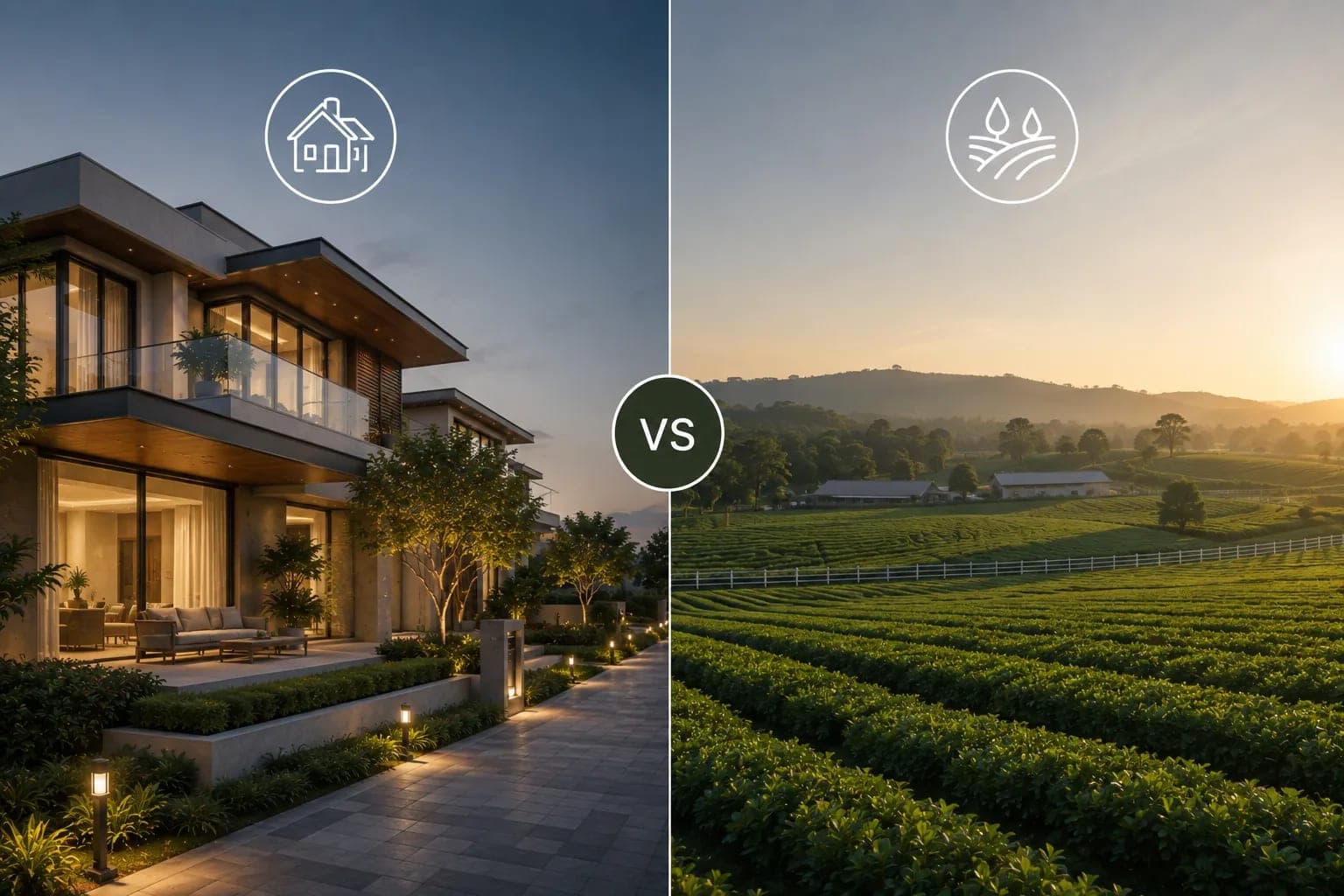
Both are land. Both are sold as long-term investments. But they work in completely different ways, and the rules around them are not remotely the same.
You can see one option on the Godrej Whitefield Villas project page. Here is an honest comparison of both, including the points that usually get left out.
Godrej Whitefield Villas and Farmland: Two Different Things
A villa is a finished home in a gated community. You buy a house on a land parcel, move in or rent it out, and use the shared clubhouse, pool and gardens.
Managed farmland is a piece of agricultural land. Someone else farms it for you and takes a fee. You own the land and get a share of whatever the farm earns.
One gives you somewhere to live. The other gives you a piece of ground that someone else works on.
Who Can Legally Buy Each One
This is the first thing to check, because it rules out a whole group of buyers.
Karnataka changed its farmland rules in 2020. The Karnataka Land Reforms (Amendment) Act, 2020 removed Sections 79A, 79B and 79C, so any Indian citizen can now buy agricultural land regardless of their job or income. Before that, only farmers could.
But here is the catch. NRIs and foreign nationals still cannot buy agricultural land in India under FEMA rules. An NRI can inherit farmland or receive it as a gift from a resident relative, but cannot simply buy it.
So if you live abroad, farmland is largely closed to you. A villa is not.
One more thing to watch. In September 2024, Karnataka's Chief Minister said he wanted to bring Sections 79A and 79B back. As of mid-2026 no such law has been passed, but the discussion continues. Rules that changed once can change again.
The Protection Gap Between Godrej Whitefield Villas and Farmland
This is the biggest difference, and it rarely appears in farmland brochures.
There is no RERA for agricultural land in Karnataka. Checking everything is entirely the buyer's job, and the risks of getting it wrong can be permanent.
Think about what RERA actually does for a housing project. The builder must register. They must declare a finish date. They must post construction updates every three months. If they miss the date, you have legal remedies. Complaints against the builder are public.
Farmland gets none of that. No registration, no declared timeline, no public complaint record, no automatic remedy.
So with farmland you carry the checking yourself. At a minimum, verify an unbroken chain of ownership going back at least 30 years. Pull the current RTC land record from the Bhoomi portal, and get an Encumbrance Certificate covering at least 13 years from the Kaveri portal.
None of this makes farmland a bad buy. It means the burden of care sits on you rather than on a regulator.
How Each One Is Paid For
Money works very differently between the two.
Home loans. Banks lend readily against a home. Agricultural land is much harder to borrow against, and normal home loans generally do not apply. So farmland usually needs your own cash.
GST. A villa under construction attracts 5 percent GST, roughly Rs 27 lakh on a Rs 5.40 Cr home. Plain land does not attract GST at all.
Stamp duty. Both attract it, though rates for agricultural land differ.
Income tax. Here farmland has a real edge. Agricultural income in India is exempt from central income tax under Section 10(1). Rent from a villa is fully taxable.
So farmland can be cheaper to enter and lighter on tax, but harder to fund.
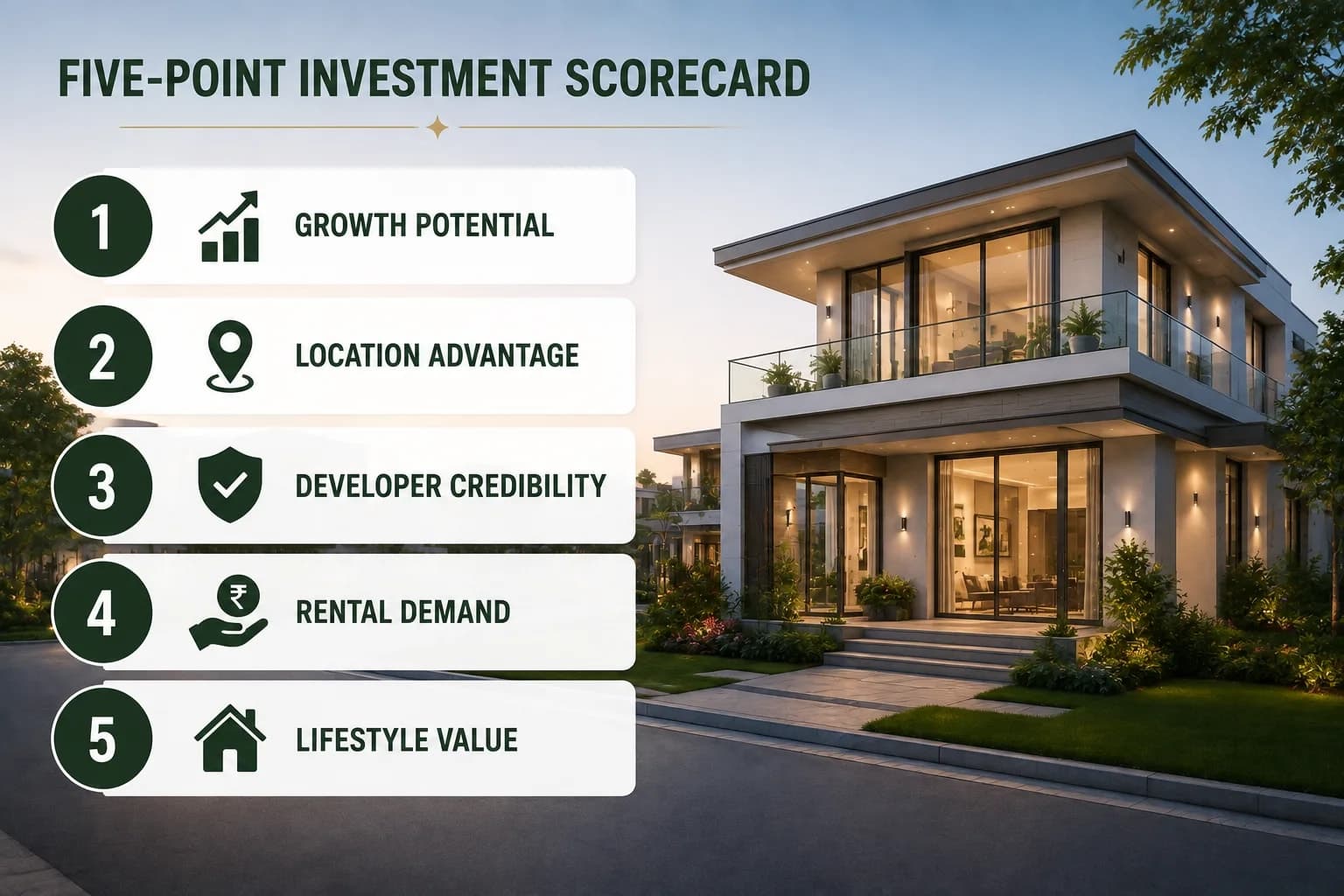
What Godrej Whitefield Villas Actually Gives You
The project is on Soukya Road, off Whitefield in East Bangalore, across about 20 acres with around 242 homes.
- 4 BHK — 3,715 sq.ft
- 4 BHK with staff room — 4,000 sq.ft
- 5 BHK with staff room — 5,500 sq.ft
Every home sits on a 3,715 sq.ft land parcel and is built as G+2, meaning ground floor plus two floors, with a private terrace. Prices start at Rs 5.40 Cr onwards.
The builder is Godrej Properties, started in 1990 and part of a group over 125 years old, with more than 200 finished projects and around 90 running now.
The location already works. ITPL, the EPIP Zone and Prestige Tech Park are close. Schools include Delhi Public School, Vydehi and Greenwood High. Hospitals include Manipal, Vydehi and Sri Sathya Sai.
You can live in it. That option simply does not exist with farmland.
Where Managed Farmland Genuinely Wins
Being fair about this matters.
The entry price is far lower. Farmland costs a fraction of a five-crore villa, so you can start with much less money.
No GST, and agricultural income is tax exempt.
All of it is land. None of your money goes into a building that will age. Land does not wear out.
Someone else does the work. That is the whole point of the managed model. You do not need to know anything about farming.
Where Managed Farmland Is Riskier Than Godrej Whitefield Villas
You depend on the operator. If the company managing the farm stops operating, you are left holding agricultural land you cannot farm yourself.
Returns are not guaranteed. Farming depends on rain, crop prices and pests. Any promise of fixed returns from a farm deserves hard questions.
Selling is harder. The pool of buyers for agricultural land is smaller, and NRIs are excluded from it entirely.
The rules could change. If Sections 79A and 79B return, the market for farmland could shift.
No regulator is watching. Worth repeating, because it is the point most brochures skip.
Which One Suits You
Choose the villa if you want somewhere to live, need a home loan, live abroad, want RERA protection, or want an asset with a wider set of future buyers.
Choose farmland if you have a smaller budget, want pure land with no building, value the tax treatment, can pay cash, and are willing to do the legal checking yourself.
They also work perfectly well together. Many families hold a home to live in and land held separately for the long term. They are not competing choices for the same rupee.
Before You Commit to Godrej Whitefield Villas
The RERA number is still to be confirmed. Under Karnataka RERA, a builder cannot advertise or take booking money for an unregistered project. Do not pay anything until the number exists, then check it yourself on the Karnataka RERA website.
Ask for carpet area in writing, the land parcel and survey numbers as they appear in the sale deed, and a full list of charges including GST and stamp duty.
More details are on the Godrej Row Houses Soukya Road project page.
This is general information, not legal or investment advice. Rules on agricultural land are complex and can change. Speak to your own lawyer and chartered accountant before buying either type of property, and always verify RERA registration yourself.